 Luciana Bettencourt


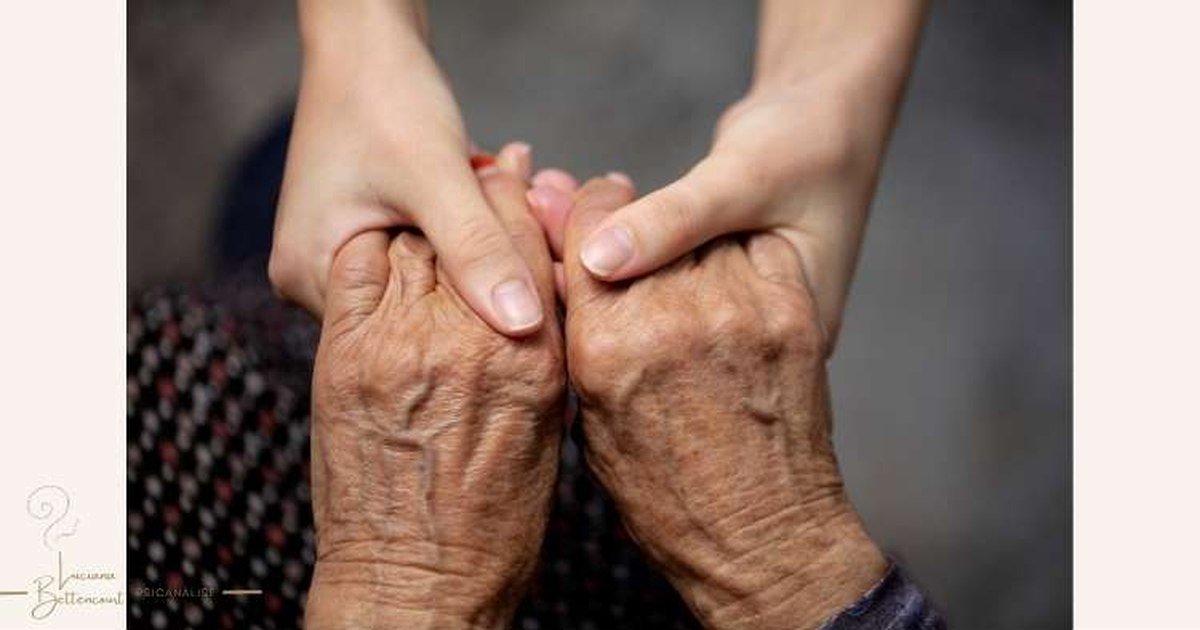
When identity is built around other people's needs
Some women know exactly what the people around them need. They notice when someone is sad, anticipate problems, organize the family routine, offer advice, calm conflicts, and take on responsibilities before anyone even asks. They take care of their children, their partner, their parents, their siblings, their friends, and often their coworkers too. They're always attentive. Always available.
Always trying to make sure everyone is okay. However, when someone asks what they want for themselves, the answer doesn't always come as easily. When there's no urgent problem to solve, no one to protect, or no situation to manage, they may feel emptiness, restlessness, guilt, or even a strange sense of uselessness. It's as if they don't quite know who they are when they aren't taking care of someone. Care, which could be an expression of affection, gradually turns into a permanent function.
The woman stops just caring and starts believing she needs to be needed in order to have worth.
Caring isn't the problem
Care is part of human relationships. Taking care of someone can be an experience of love, responsibility, solidarity, and presence. The problem isn't in the act of caring. The difficulty appears when the woman feels she has no choice. She cares because she believes that, if she doesn't, something bad will happen.
She cares because she can't bear seeing the other person frustrated. She cares because she's afraid of being considered selfish. She cares because she feels everyone depends on her. She cares because she learned that being loved means being useful. In these cases, care stops being a possibility and starts functioning as an internal obligation.
The woman may be exhausted, sick, or emotionally overloaded and still feel she has no right to stop. She doesn't only think: "I want to help." At some level, she may feel: "I need to help in order to keep being important."
When being needed becomes identity
Some people build a large part of their identity around the place they occupy in other people's lives. They recognize themselves as:
the daughter who fixes things;
the mother who handles everything;
the partner who holds the relationship together;
the friend who always listens;
the responsible sister;
the professional who never fails;
the strong one in the family.
These places can bring recognition. The woman may hear that she's indispensable, generous, mature, strong, and reliable. Although these compliments seem positive, they can also trap her. If everyone knows her as the one who can handle anything, how could she admit she's tired? If she's always been the responsible one, how could she say she can't solve something?
If her importance is tied to caretaking, what will happen once she starts setting limits? The woman may fear that, by stopping caring, she'll also stop being loved.
Where does the need to take care of everyone come from?
There's no single explanation. Each person builds this position from her own singular history. However, some experiences can contribute to a child learning, very early on, to occupy the place of caretaker. Maybe she grew up in a home where the adults were emotionally fragile. Maybe she realized she needed to avoid conflict.
Maybe she took care of younger siblings. Maybe she learned to watch her parents' moods to know whether the environment was safe. Maybe she received love and recognition mainly when she was obedient, helpful, and mature. Maybe she felt there was no room for her own needs because someone else in the family was suffering more. The child may conclude, even without putting it into words:
"I can't cause trouble." "I need to help." "I have to be strong." "My feelings need to wait." "If I take care of everyone, maybe no one will leave."
"If I'm needed, I'll keep having a place." These conclusions can remain active in adult life. The woman grows up, but keeps believing she needs to guarantee the emotional balance of the people around her.
The child who learned not to need
Some women who take excessive care of others learned very early to hide their own needs. As children, they noticed that showing sadness, fear, anger, or insecurity could add to the family's problems. So they became "easy." They didn't complain. They didn't ask.
They didn't demand. They adapted. They may have been described as mature, responsible, independent children. However, that early maturity often hid a renunciation. The child who seemed not to need anyone may have learned that there was no safe space to need.
She didn't stop having needs. She just learned to silence them. In adult life, this woman may find it difficult to ask for help, receive care, or admit vulnerability. She knows how to give, but doesn't know how to receive. She knows how to recognize the other person's pain, but may not identify her own.
She knows how to be available, but feels discomfort when someone tries to take care of her.
Care as an attempt to avoid abandonment
In some cases, taking care of everyone works as an attempt to make sure relationships continue. The woman may unconsciously believe she'll be loved as long as she's useful. She may offer attention, support, availability, money, advice, work, and time, hoping all that investment will protect the bond. When someone pulls away, she doesn't just feel sad. She may feel she failed.
She asks herself: "What more could I have done?" "Why couldn't I help him?" "Where did I go wrong?" The possibility that the other person has their own desires, limits, and choices can be hard to bear.
So she tries to do more. Advise more. Forgive more. Offer more. Tolerate more.
Care can work as a defense against the anguish of loss. If she's indispensable, maybe no one will abandon her. However, bonds held together by need aren't necessarily bonds held together by love.
The fantasy that everything depends on you
The woman who occupies the place of caretaker may feel that, if she stops, the entire structure will collapse. She believes no one will know how to handle things. That her children won't manage. That her partner will get lost. That her mother will be left helpless.
That her friends won't be able to bear their own difficulties. This feeling can have some relation to reality. In many families, a woman really does take on a disproportionate amount of responsibility. However, there can also be an important psychic dimension. By taking everything on, she keeps others from taking responsibility for their own lives. She may say no one does anything correctly, but also have difficulty allowing them to do it differently.
She may complain that everyone depends on her and, at the same time, feel threatened when someone stops depending on her. Other people's dependence confirms her importance. That's why a loved one's autonomy can trigger contradictory feelings. She wants the other person to grow, but fears losing her place when that happens.
"I just want to help"
It isn't always easy to notice when care has crossed a limit. The woman may claim she's only trying to help. However, it's important to ask: Did the other person ask for this help? Does the responsibility really belong to you?
Can you respect it when someone doesn't follow your advice? Do you help by choice, or because you feel guilty? Does your care allow the other person to grow, or does it keep them dependent? Can you keep loving someone without solving their problems? These questions aren't meant to condemn care.
They help distinguish presence from control, love from obligation, and help from intrusion. Not all help is received as care. Sometimes, by trying to prevent the other person's suffering, a person also prevents them from making choices, facing consequences, and building autonomy.
When caring is also a form of control
Excessive care can contain an attempt at control, even when that intention isn't conscious. By anticipating everything, deciding for everyone, and avoiding any frustration, the woman tries to keep the environment predictable. If everyone is okay, maybe she'll feel safe too. The other person's suffering can trigger such intense anguish that she feels she needs to do something immediately. Not because the other person is incapable of bearing it, but because she herself has difficulty staying present with pain without acting on it.
She advises when the other person needs to be listened to. She solves when the other person needs to experience something. She interferes when the other person needs to choose. Caring becomes a way of reducing her own anxiety. Recognizing this dimension can be uncomfortable, but it can also be freeing.
It means understanding that we don't always need to eliminate the pain of the people we love. Sometimes, loving means staying present without taking the other person's place.
The woman who knows everything about others and little about herself
When attention remains constantly turned outward, inner life can become unfamiliar. The woman knows what her partner likes. She knows her children's schedules. She remembers her parents' medical appointments. She notices when a friend isn't doing well.
However, she may not know how to answer: "What makes me happy?" "What do I want?" "What would I do with my time if no one needed me?" "What are my interests?"
"What do I miss?" "When was the last time I did something just because I wanted to?" These questions can produce emptiness. Not because this woman has no desires, but because she may have gone a long time without listening to them. Her desires were postponed, minimized, or considered less important.
She may have learned that taking care of herself is selfish, and that choosing something for herself means taking something away from someone else. So even pleasure can trigger guilt.
The guilt of starting to take care of yourself
When a woman used to taking care of everyone starts setting limits, guilt commonly appears. She may feel bad saying "no." She may think she's abandoning her children by setting aside a few hours for herself. She may believe she's being a bad daughter by not immediately meeting her mother's requests. She may feel she's failing as a partner by no longer solving every problem in the relationship.
This guilt doesn't necessarily mean she's doing something wrong. It can indicate she's doing something new. For a long time, her identity may have been organized around availability. As she starts prioritizing herself, she comes into conflict with an old image of who she is. The woman who always said "yes" may feel cruel saying "no."
The one who always came to the rescue may feel indifferent when she allows the other person to face a consequence. The one who always sacrificed herself may feel selfish resting. The new limit can be healthy and still cause suffering.
The fear of disappointing
One of the great difficulties for someone who lives taking care of others is bearing other people's disappointment. When the woman starts to change, some people around her may react. They may say she's different. That she's become distant. That she's only thinking about herself.
That she used to be more available. These reactions can activate the fear of losing love and approval. It's important to understand that every limit changes a relationship. People used to unrestricted availability may interpret the change as rejection. However, the fact that someone gets frustrated doesn't mean the limit is wrong.
The woman can love and still not meet every need. She can be caring without taking on responsibilities that belong to others. She can understand someone's frustration without undoing her own decision.
Why do some women get involved with people who need to be saved?
When identity is built around caretaking, relationships with autonomous people can feel strange. The woman may feel more drawn to those who need help, guidance, protection, or recovery. She may get involved with partners who are emotionally unavailable, dependent, disorganized, or fragile. These relationships offer her a familiar place. She knows what to do when someone needs saving.
What she may not know is how to relate when there's no mission to fulfill. In a more balanced relationship, she would need to show up not only as a caretaker, but as a woman. She would need to reveal desires, needs, limits, insecurities, and contradictions. That can be more threatening than helping someone. While she's caring, she stays occupied with the other person.
When care stops being the center of the relationship, she needs to find herself.
Being needed isn't the same as being loved
This distinction is fundamental. A person can be needed because she solves problems, pays bills, organizes the routine, offers support, or emotionally sustains a family. But being needed doesn't guarantee that she's truly seen. The woman can spend years being recognized for everything she does, while being little known for who she is. People seek out her strength, her availability, and her ability to solve things.
Few ask how she is. In some cases, she herself contributes to this dynamic because she rarely reveals her own needs. She always presents herself as strong. She answers that everything is fine. She offers help before anyone notices she also needs it.
The problem is that, when a person offers only her usefulness, others may relate mainly to that function. The woman becomes indispensable, but remains emotionally alone.
The emptiness when no one needs her
When children grow up, a relationship ends, or a family member becomes more independent, this woman may feel a deep emptiness. It isn't just longing. An identity crisis can arise. For years, her routine, her thoughts, and her personal worth were tied to caretaking. When that function decreases, she asks herself:
"Now what?" "What am I for?" "What do I do with my life?" "Who am I beyond being a mother, wife, daughter, or caretaker?" These questions can come with sadness, anxiety, and disorientation.
The woman may quickly look for someone else to take care of. She may take on new problems. She may become even more present in her adult children's lives. She may create situations in which she feels indispensable again. The emptiness is hard to bear because it reveals the absence of a life also built from herself.
Caring can be a way of not looking at your own life
Staying busy with other people's problems can avoid the encounter with personal questions. While trying to save her partner, the woman doesn't need to ask why she stays in that relationship. While taking care of her whole family, she doesn't need to think about the career she gave up. While solving her adult children's crises, she doesn't need to come into contact with her own loneliness. While listening to all her friends, she doesn't need to talk about her own pain.
Care can become a form of psychic distraction. This doesn't mean other people's suffering is invented. It means that being occupied with it can also protect the woman from encountering what, within herself, remains unanswered.
And what do you want?
In psychoanalysis, the question of desire holds a central place. Desire isn't reduced to immediate wants or practical decisions. It's about recognizing what moves the subject beyond family expectations, obligations, and the images she built in order to be loved. For a woman used to caretaking, asking about her own desire can be difficult. She may answer with other people's needs:
"I want my children to be okay." "I want my marriage to work out." "I want my mother not to suffer." These desires can be legitimate, but they still point toward the other person. The question remains:
"And you?" What do you want for your own life? This question can produce anguish because it takes the woman out of a familiar place. Desiring means recognizing that there's something in you that doesn't belong entirely to your family's needs. It means admitting that maybe you want something others don't understand.
That you might choose a different path. That you might disappoint expectations. That you won't manage to be everything for everyone.
How can psychoanalysis help?
Psychoanalysis offers a space in which a woman doesn't need to immediately occupy the place of caretaker. She can talk about her history, her bonds, her guilt, and her desires. She can investigate how she learned that she had to be strong. She can understand why asking for help feels so difficult. She can recognize the fear that appears when she sets limits.
She can notice what she's trying to avoid by always staying busy with other people's problems. Analytic work doesn't try to turn a caring woman into someone indifferent. Nor does it suggest abandoning responsibilities or loved ones. Analysis allows for investigating when care is a choice, and when it functions as an unconscious demand. Throughout the process, the woman can recognize:
how her personal worth became tied to usefulness;
which experiences taught her not to need;
why the other person's frustration triggers so much guilt;
what she fears losing if she stops being indispensable;
which desires were postponed;
how caring may be covering fear, control, or loneliness;
which responsibilities really belong to her;
who she can be beyond the functions she performs.
Analysis doesn't offer a ready-made identity. It creates the conditions for the person to listen to herself and build a more genuinely her own relationship with her desire.
Learning to receive
For someone who has always taken care of others, receiving can be an uncomfortable experience. Receiving requires recognizing a need. It requires trusting that the other person can offer something. It requires temporarily giving up control. The woman may refuse help, minimize her suffering, or feel indebted when someone does something for her.
Maybe she learned that receiving means depending. And depending may have been experienced as dangerous. In the analytic process, she can begin to understand that needing isn't the same as being incapable. That vulnerability isn't weakness. That a relationship can include exchange.
That love doesn't need to be earned through permanent sacrifice.
Setting limits without abandoning love
Limits aren't punishments. They indicate where one person ends and another begins. A woman can love her children without solving every one of their difficulties. She can love her mother without meeting all of her expectations. She can support her partner without taking responsibility for his choices.
She can listen to a friend without becoming her only source of support. The limit allows each person to be responsible for her own life. This can be painful at first. The woman may feel she's leaving someone alone. However, not taking the other person's place can also be a form of respect.
It means recognizing that they have their own resources, choices, and responsibilities.
Who are you beyond the functions you fill?
You can be a mother, daughter, partner, professional, and friend. These functions are part of your life, but they don't exhaust your identity. There is a person beyond what you offer to others. A woman with desires, doubts, interests, limits, pleasure, creativity, and contradictions. Maybe that woman has remained silent for a long time.
Maybe you still don't know exactly who she is. That doesn't mean she doesn't exist. It means she may need room to appear. Beginning to know yourself doesn't require abandoning the people you love. It only requires that you stop abandoning yourself in order to keep loving them.
You don't need to be indispensable to have worth
Maybe you learned that your place depends on what you can do for others. Maybe you were loved mainly when you helped, obeyed, understood, and caused no trouble. Maybe the idea of resting still triggers guilt. Maybe you feel empty when no one needs you. But your worth can't depend only on your usefulness.
You don't need to solve everything to deserve love. You don't need to sacrifice yourself to keep belonging. You don't need to get sick to prove you care. You don't need to take on every responsibility to be recognized as a good woman. Care can continue being part of your life.
But it can stop being the only way through which you exist. It's possible to care without erasing yourself. To help without controlling. To love without saving. To be present without taking the other person's place.
And to build an identity that doesn't disappear every time someone needs you.
An invitation to reflect
Who are you when no one is asking for your help? What do you feel when someone no longer needs your care? Can you allow the people you love to face their own choices? In which relationships do you feel important only because you're useful? What would you like to do with your time if you didn't need to take care of everyone?
Which of your own desires have been postponed? Do you know how to receive the same care you offer? These questions can help you recognize whether caring has been a loving choice, or a way of avoiding guilt, emptiness, and the encounter with your own desire. In our first conversation, we can talk about what you're going through, understand what has brought you to seek support, and both sense whether it makes sense to continue with an analytic process.
Theoretical references
FREUD, Sigmund. On Narcissism: An Introduction (1914).
FREUD, Sigmund. Remembering, Repeating and Working-Through (1914).
FREUD, Sigmund. The Ego and the Id (1923).
WINNICOTT, Donald W. The Maturational Processes and the Facilitating Environment.
LACAN, Jacques. The Seminar, Book V: Formations of the Unconscious.
LACAN, Jacques. The Seminar, Book XI: The Four Fundamental Concepts of Psychoanalysis.